
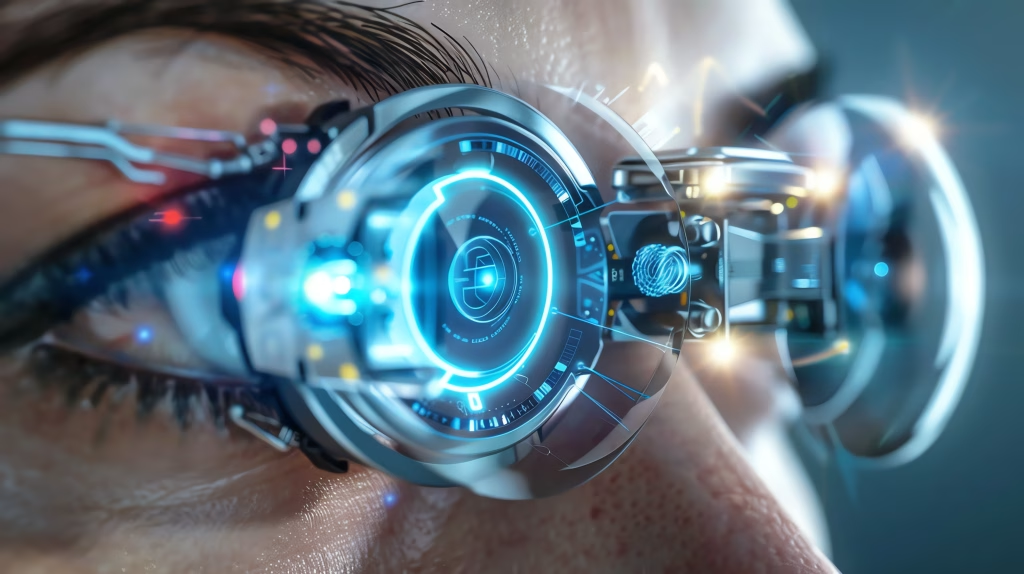
The field of ophthalmology is experiencing a technological revolution. With millions of people worldwide suffering from vision issues, early detection and precise diagnosis are important for averting irreversible damage. Introducing smart ophthalmology devices powered by artificial intelligence (AI), an innovative trend prepared to change eye care as we know it.
In this article, we’ll look at how AI integration is driving innovation in ophthalmology devices, the advantages for patients and physicians, real-world applications, Medrays’ role in medical data labeling, and what the future holds.
What Are Smart Ophthalmology Devices?
Smart ophthalmology devices are medical instruments equipped with advanced technologies, including AI algorithms, computer vision, and machine learning, to assist in diagnosing, monitoring, and managing eye conditions. Unlike traditional tools that rely solely on clinician expertise, these devices leverage data-driven insights to improve accuracy, speed, and patient outcomes.
Examples include:
- AI-powered retinal cameras that automatically detect abnormalities in fundus images.
- Optical Coherence Tomography (OCT) devices with integrated AI for detailed retinal layer analysis.
- Smart wearable devices that monitor intraocular pressure for glaucoma patients in real-time.
These devices do not replace ophthalmologists but enhance their ability to deliver timely and precise care.
How AI Integration Improves Ophthalmology Devices
Artificial intelligence improves ophthalmology devices in a variety of ways:
1. Early detection of eye diseases.
Artificial intelligence systems can analyze retinal scans and fundus images to detect early indicators of diabetic retinopathy, glaucoma, age-related macular degeneration (AMD), and cataracts, often before symptoms appear. Early diagnosis is critical because it allows for intervention before visual loss is irreversible.
2. Automated image annotation.
Medical image annotation is a key component of AI-powered ophthalmology. AI systems can automatically detect lesions, microaneurysms, and retinal abnormalities, easing the strain on clinicians and lowering human error. This accelerates screening processes and increases diagnosis reliability.
3. Personalized treatment recommendations.
AI may assess a patient’s retinal data and offer specific treatment methods, in addition to detecting disease. For example, in AMD care, AI systems can anticipate disease development and recommend personalized monitoring intervals or therapeutic measures.
4. Remote Patient Monitoring.
Smart ophthalmology devices with AI enable patients to be monitored from home. Wearable sensors can monitor parameters such as intraocular pressure or ocular blood flow, allowing clinicians to detect possible problems before they progress. This is especially advantageous for glaucoma patients, as it reduces hospital visits while providing continuous care.
5. Clinical Decision Support
AI-powered devices serve as a second pair of eyes for ophthalmologists. By highlighting abnormal findings, generating risk scores, and summarizing patient data, these tools support faster and more accurate clinical decisions.
Real-world applications
Several AI-integrated ophthalmology devices are now revolutionizing clinical practice:
- IDx-DR is an FDA-approved artificial intelligence technology that automatically detects diabetic retinopathy in retinal images without the need for an on-site specialist.
- Optovue OCT devices are AI-enhanced OCT machines that evaluate retinal layers to diagnose early-stage macular degeneration.
- Smart Contact Lenses and Wearables: Devices in development that continually monitor intraocular pressure in glaucoma patients and integrate data with AI dashboards for doctors.
These technologies show how AI integration increases diagnostic accuracy while also increasing access to eye care, particularly in underserved or distant areas.
Benefits of AI-Integrated Ophthalmology Devices:
- Increased Accuracy: AI algorithms evaluate millions of data points to identify minor changes that humans often overlook.
- Time Efficiency: Automated analysis saves clinicians time from manually reviewing scans, allowing them to focus on patient care.
- Early Intervention: Detecting illnesses in their early stages enables timely treatment, which improves outcomes and quality of life.
- Accessibility: AI-powered teleophthalmology programs allow for screening in remote areas without access to professionals.
- Data-Driven Insights: Continuous data collection aids in illness progression tracking, treatment tailoring, and research assistance.
Challenges to Overcome
While the future is promising, some challenges remain:
- Data Privacy and Security: AI devices handle sensitive patient data, requiring robust cybersecurity measures.
- Regulatory Compliance: Devices must meet FDA, CE, or local regulatory standards before deployment.
- Integration With Existing Workflows: Clinicians may need training to effectively use AI-enhanced devices.
- Bias and Accuracy: AI systems must be trained on diverse datasets to avoid diagnostic bias across populations.
Addressing these challenges is crucial for the safe and effective adoption of smart ophthalmology devices.
The Future Outlook
The future of ophthalmology is in fully integrated AI ecosystems. Tomorrow’s clinics may have retinal scans, OCT results, and wearable sensor data fed into AI platforms that provide real-time analysis, risk assessment, and treatment suggestions. Beyond the clinic, AI-enabled mobile apps could allow patients to perform preliminary eye tests at home, with results automatically uploaded for professional review.
Emerging technologies like generative AI and foundation models may further enhance smart ophthalmology devices, enabling automated report generation, patient communication, and predictive analytics at scale. With reliable medical annotation support from Medrays, AI models will continue to improve in accuracy, reliability, and clinical utility.
Medrays: Precision Data for Eye Health AI
AI integration is revolutionizing ophthalmology by making devices smarter, more accurate, and patient-centric. From early detection and automated annotation to personalized treatment and remote monitoring, smart ophthalmology devices are bridging the gap between data and meaningful clinical action. Platforms like Medrays play a critical role by providing high-quality medical data labeling, which ensures AI systems can perform reliably in real-world clinical settings.
As technology continues to evolve, these devices will not only enhance care but also transform the way we think about eye health, ensuring millions retain their vision and quality of life.