
For many people, a colonoscopy feels uncomfortable even before it starts. The preparation, sedation, and hospital visit make it feel invasive and inconvenient. Because of this, many people delay or avoid screening, even when doctors strongly recommend it.
Now, a simple pill can change that.
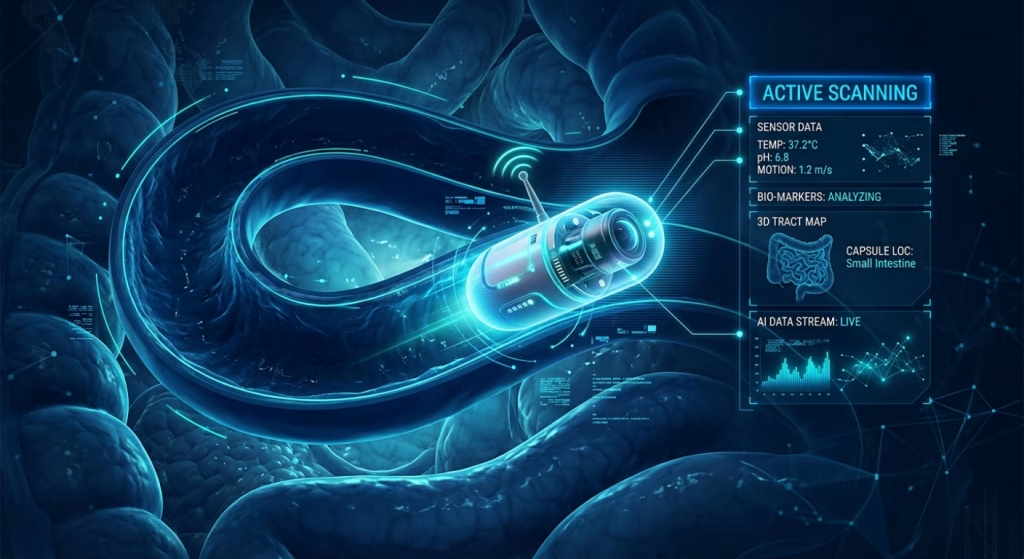
Researchers at Johns Hopkins University are developing a small, vitamin-sized smart capsule. Patients can swallow it with water. The capsule moves through the digestive tract, capturing thousands of high-quality images. It sends this data wirelessly while artificial intelligence (AI) analyzes the images and detects abnormalities in real time. This makes the process easier and less stressful for patients.
Why Screening Matters
Colorectal cancer is one of the most common cancers worldwide. Early detection can save lives and reduce the need for complex treatments. Doctors can find and remove polyps before they turn into cancer.
However, many people skip screening because of fear, discomfort, or lack of access to proper healthcare. This delay increases the risk of late diagnosis. Smart capsules make screening simpler and more accessible, encouraging more people to get tested on time.
What is a Smart Capsule Endoscope?
A capsule endoscope is a small, swallowable camera. It captures images for several hours as it moves through the digestive system. Patients can continue their daily routine without staying in a hospital.
Advanced capsules include multiple small cameras for wider and clearer coverage. When combined with AI, these devices can detect even small or hidden abnormalities that may be difficult to notice during manual review.
How AI Supports Detection
AI helps doctors by quickly analyzing large volumes of medical images. It identifies patterns linked to disease and helps detect:
- Polyps
- Tumors
- Bleeding
- Inflammation
- Abnormal tissue
AI highlights areas that need attention, allowing doctors to review them more quickly and accurately. This reduces manual effort and improves consistency. Some systems can achieve up to 98% detection accuracy in controlled settings.
Key Benefits
- No need for sedation or invasive procedures
- Better comfort and safety for patients
- Higher screening participation
- Continuous imaging inside the body
- Faster and more efficient analysis
Why Data Quality Matters
AI depends on high-quality, well-labeled data. Medical experts mark and label images by identifying polyps, lesions, and other abnormalities. This training helps AI systems learn correctly.
A single capsule test can generate up to 100,000 images. If the data is not labeled accurately, the AI may miss critical signs or produce incorrect results. High-quality annotation is essential for reliable performance.
Medrays for AI Annotation
Medrays provides accurate medical image annotation for gastrointestinal AI solutions. The team carefully labels polyps, lesions, tumors, and inflamed regions using strict quality checks and structured workflows.
We help transform large volumes of medical images into reliable datasets that improve AI accuracy and clinical outcomes.
Work with Medrays to build accurate and dependable AI solutions for gastroenterology.