
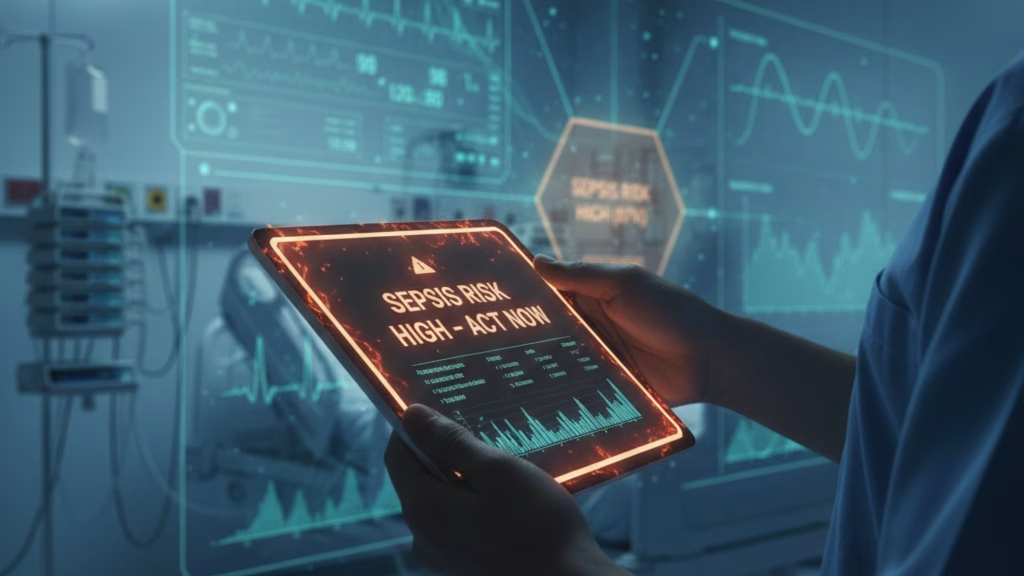
Sepsis is one of the most dangerous medical emergencies in hospitals today. It happens when the body’s response to an infection damages its own organs and tissues. If not detected early, sepsis can quickly lead to organ failure and even death. In intensive care units, where patients are already critically ill, sepsis remains a major challenge.
Doctors and nurses work around the clock to spot early warning signs, but sepsis can be difficult to detect. Symptoms often look like other conditions, and changes in vital signs can happen fast. This is where Artificial Intelligence, or AI, is making a powerful difference. AI tools are helping healthcare teams identify sepsis earlier, respond faster, and improve patient outcomes.
Let us explore how AI is transforming early sepsis detection in ICUs.
Why Early Detection of Sepsis Matters
Sepsis progresses rapidly. Every hour of delay in treatment increases the risk of death. Early intervention with antibiotics, fluids, and supportive care can save lives, but only if clinicians recognize sepsis in time.
Traditional methods rely on clinical judgment, lab results, and scoring systems. While helpful, these approaches may miss early warning signs or detect sepsis only after the condition has worsened. ICU staff manage large volumes of patient data every minute, making it difficult to catch subtle changes that signal trouble.
This is where AI brings new value.
How AI Detects Sepsis Earlier
AI systems analyze vast amounts of patient data in real time. This includes vital signs, lab values, medical history, medications, and clinical notes. Instead of looking at each data point separately, AI models examine patterns across multiple signals at once.
For example, a slight rise in heart rate, a mild drop in blood pressure, and subtle lab changes may not seem alarming individually. But together, they could indicate early sepsis. AI can detect these patterns faster than humans and trigger alerts before symptoms become severe.
These systems continuously learn from new data, improving accuracy over time. This allows clinicians to act sooner and deliver treatment when it is most effective.
Real Time Monitoring in ICUs
One of the biggest strengths of AI in the ICU is continuous monitoring. Patients generate massive amounts of data every second through bedside monitors, ventilators, infusion pumps, and lab systems. AI platforms integrate this information and track changes in real time.
When the risk level becomes high, the system alerts the care team immediately.
This early warning system gives clinicians valuable time to evaluate the patient, order tests, and begin treatment. Instead of waiting for an emergency, they can act early to prevent problems.
This change from treating emergencies to preventing them is helping save lives and speed up recovery.
Reducing Alarm Fatigue
ICUs already have many alarms, and too many alerts can stress staff. One advantage of AI-driven systems is their ability to prioritize alerts based on actual risk. Instead of sending frequent low-value warnings, AI focuses on clinically meaningful signals.
By reducing false alarms and highlighting only high-risk cases, AI helps clinicians stay focused and respond faster when it truly matters. This improves both patient safety and staff efficiency.
Supporting Clinical Decisions
AI does not replace doctors or nurses. Instead, it acts as a decision support tool. It provides risk scores, trend insights, and possible explanations behind alerts. Clinicians can then combine these insights with their expertise to make informed decisions.
For example, an AI model may identify a patient as high risk for sepsis within the next six hours. This allows doctors to order labs early, adjust medications, or increase monitoring. These quick actions can stop patients from getting worse and lead to better recovery.
Improving Patient Outcomes
Hospitals using AI-based sepsis detection tools have reported promising results. Studies show fewer sepsis deaths, shorter ICU stays, and quicker treatment. Early detection also lowers healthcare costs by preventing complications and reducing the need for prolonged critical care.
Most importantly, patients receive care before their condition becomes life-threatening. This means better survival rates, faster recovery, and improved quality of life after discharge.
The Role of High Quality Data
AI systems are only as good as the data they learn from. For sepsis detection, accurate labeling of patient records, vital signs, lab results, imaging, and clinical notes is essential. Errors or inconsistencies in data can reduce model accuracy and create unreliable predictions.
This is where expert medical data annotation becomes critical. Radiologists, clinicians, and trained annotators must ensure that datasets reflect real clinical scenarios and outcomes. Well-curated data allows AI models to learn meaningful patterns and perform reliably in real-world ICU environments.
Challenges and Ethical Considerations
While AI has great potential, some challenges still exist. Hospitals must ensure patient data privacy and security. AI systems must be transparent so clinicians understand how predictions are made. Bias in data must be corrected to ensure fair and accurate care for everyone.
With the right rules, testing, and human supervision, AI can become a trusted tool in critical care.
How Medrays Supports AI-Driven Sepsis Detection
At Medrays, we specialize in powering healthcare AI with high-quality, clinically accurate data. Our experts in radiology, clinicians, and medical annotators help organizations build reliable AI systems for early disease detection, including sepsis in ICUs.
We support:
• Medical data annotation for vitals, labs, imaging, and clinical records
• Clinical validation and quality assurance for AI training datasets
• Structured and unstructured healthcare data preparation
• AI model support across critical care, radiology, pathology, and diagnostics
By delivering precision-labeled datasets, Medrays helps AI systems recognize early warning signs, reduce false alerts, and improve real-world performance in hospital environments.
Conclusion
Sepsis remains one of the most urgent challenges in intensive care, but AI is changing how early and effectively it can be detected. Through real-time monitoring, pattern recognition, and predictive insights, AI enables clinicians to intervene sooner and save more lives.
However, behind every successful AI model is high-quality medical data. With Medrays as your data partner, healthcare innovators can build accurate, reliable, and clinically meaningful AI solutions that support faster diagnosis, better care, and improved patient outcomes.
The future of critical care is proactive, predictive, and powered by AI, and Medrays is proud to be part of that transformation.